With today being Election Day, I felt it appropriate to repost this blog from August of 2022, which addresses the Biblical perspective we must take as it pertains to government and what it ought/ought not do -
"The nine most terrifying words in the English language are: 'I'm from the government, and I'm here to help'." - President Ronald Reagan
Former President Reagan offered these words during a news conference in August of 1986. Two of the key points in his speech (taken from the Ronald Reagan Presidential Foundation and Institute) were:
- Government creates unpredictability due to constantly changing policies, and
- The government's goals sometimes don't align with the nation's goals
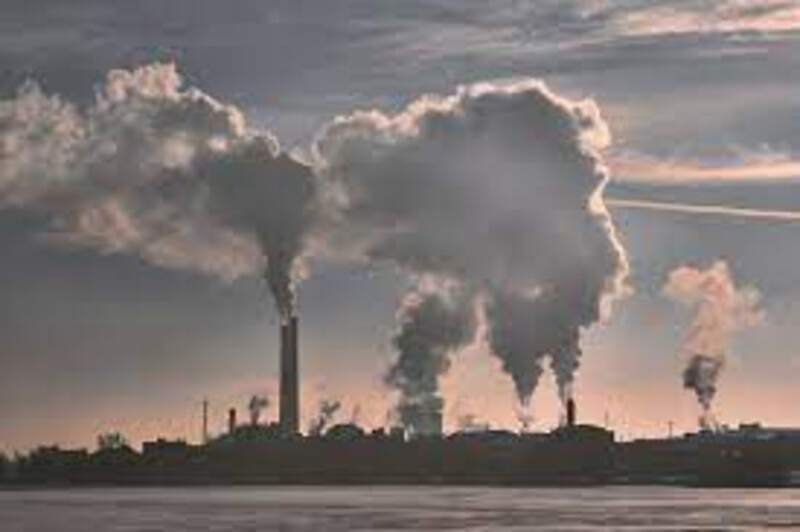
With President Reagan's words in mind, I write today in response to yet another Supreme Court case - The State of West Virginia v. The Environmental Protection Agency. This ruling was handed down by the nation's highest court on June 30th. West Virginia (along with a number of co-signers) filed this petition to protest what they believe to be government overreach by the EPA.
In 1970, the EPA was given authority by Congress to regulate air emissions through the Clean Air Act, which the agency has so done for more than 50 years. But, over the course of that time, the EPA has assumed for itself, West Virginia contends, authorities that it was not granted in the Act. This case would set the stage, in one direction or the other, for administrative agencies going forward. In this respect, this ruling is significant.
As you know, our Republic form of government was founded under the principle understanding that corruption of power is inevitable and that an appropriate effort toward curtailing that corruption would be the separation of powers - hence the Legislative, Executive and Judicial branches of government. In the case of the EPA, the power was granted to it by the Legislative Branch, but the administration of such power was being wielded by the Executive Branch in an effort to achieve its own objectives. So, by the powers vested unto it in the Constitution, the Judicial Branch has stepped in to rule on such practices.
Just as the two previous cases that I reported on, this Court again ruled in a 6-3 majority (Justices Roberts, Gorsuch, Barrett, Thomas, Alito and Kavanaugh in opposition to Justices Kagan, Breyer, and Sotomayor) that the EPA had overstepped the powers granted to it by the legislature in 1970.
Justice Gorsuch, in the final paragraph of his concurring Opinion (the Opinion was written by Roberts), states the following -
"When Congress seems slow to solve problems, it may be only natural that those in the Executive Branch might seek to take matters into their own hands. But the Constitution does not authorize agencies to use pen-and-phone regulations as substitutes for laws passed by the people’s representatives. In our Republic, “[i]t is the peculiar province of the legislature to prescribe general rules for the government of society.” Because today’s decision helps safeguard that foundational constitutional promise, I am pleased to concur."
Justice Kagan's Dissent reveals the fundamentally opposite approach to governing. Here, see the final paragraph in her Dissent -
"The subject matter of the regulation here makes the Court’s intervention all the more troubling. Whatever else this Court may know about, it does not have a clue about how to address climate change. And let’s say the obvious: The stakes here are high. Yet the Court today prevents congressionally authorized agency action to curb power plants’ carbon dioxide emissions. The Court appoints itself—instead of Congress or the expert agency—the decisionmaker on climate policy. I cannot think of many things more frightening. Respectfully, I dissent."
I, for one, seek to gain my principles for governing from Scripture. And, knowing what we are taught in Scripture concerning the hearts of men ("The heart is deceitful above all things, and desperately sick; who can understand it?" - Jeremiah 17:9), I tend to approve of any measure that restricts authority. The king that Israel so desperately wanted seemed to be a glorious prospect in their eyes. They would have someone to look to and someone to lead them into battle. They were very pleased with the possibilities. But God knew differently. In His conversation with Samuel, He told him how the king would conduct business. In I Samuel 8:18, God said, "And in that day you will cry out because of your king, whom you have chosen for yourselves, but the LORD will not answer you in that day.”
When we look to government as leader and savior, we place undue trust in it to rescue us from danger. This is why Justices Kagan, Breyer and Sotomayor feel as they do. This explains their emotional, irrational and dishonest response and their unwillingness to address the actual issue at hand which is not climate change, but executive overreach. These Justices cheer on the unscrupulous means because they achieve their preferred, perverted ends.
When we look to God as leader and savior, we are placing due trust in Him to rescue us from danger. This explains our measured, sane and honest response.
The difference between the two approaches lies entirely in the object of our trust. What shall be our motto? In God We Trust? -OR- In (self) Government We Trust?
"I lift up my eyes to the hills. From where does my help come? My help comes from the LORD, who made heaven and earth." - Psalm 121:1-2
Pastor Jeremy